
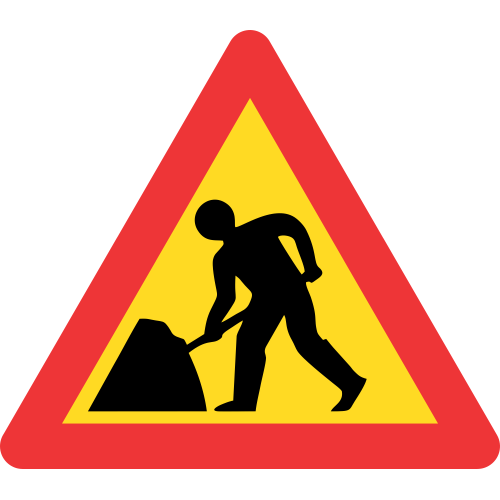
Traffic signs provide valuable information to drivers and other road users. They represent rules that are in place to keep you safe, and help to communicate messages to drivers and pedestrians that can maintain order and reduce accidents. Neglecting them can be dangerous.
Most signs make use of pictures, rather than words, so that they are easy to understand and can be interpreted by people who speak a variety of languages. For this reason, it’s important that you know what each picture represents, and that you use them to inform your driving. Failing to do so could result in a serious accident or a fine.
What Do the Different Traffic Signs Mean?
Traffic signs come in a variety of shapes and colours, and each has a specific meaning. The different shapes and colours are there to help you identify a sign as quickly as possible, without interrupting your driving. According to the Road Traffic Management Corporation, the various road traffic signs are classified into four main groups and sub-categories, for example:
What Do Speed Signs Look Like?
Speed signs are some of the most important and common traffic signs you’ll find on the roads, and it’s crucial that you obey them. Speed signs are round signs with a red circle around the edge and a black number inside. The number indicates the maximum speed (in kilometres per hour) you are permitted to drive in that area.
It applies until you see another sign, indicating that the limit has changed. As you leave a major city, you’ll likely find that the numbers on speed signs go up from 60 to 80 to 100 and finally 120, which is the maximum speed limit on South Africa’s highways.
Round signs that have a blue background and a number written in white inside them indicate the minimum speed limit in that area. A blue sign with the number 50 written in it means that you cannot driver slower then 50km/h no matter which lane you are travelling in.